
A carbon dioxide negative direct replacement to fossil coal

Our products

  • GreenCoal is a carbon dioxode negative, environmentally friendly replacement for fossil coal with a very high calorific value
  • GreenCoal does not require any replacements or alterations of pre-existing fossil coal handling/burning facilities
  • GreenCoal will be priced on par with fossil coal
  • As a bi-product we will produce a very nutritious animal feed, with high levels of protein, energy, minerals, and vitamins

Our markets

We have strategically chosen to establish ourselves geographically where we have the best combination of reaching a low production cost vs easy market access. Our key requirements are:

  • Access to affordable land 
  • Good conditions for growing elephant grass, and/or access to an ample supply of optional biomasses
  • Good access to suitable labor
  • High demand for our products

We have therefore incorporated subsidiaries in Ethiopia, Oman and Malaysia, where these key requirements are met.
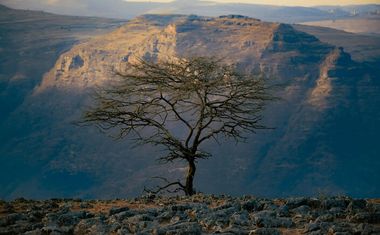
Ethiopia

The Ethiopian cement industry’s demand for coal is considerable, and Ethiopia is where the two Green Coal founders have spent most of, and built, their careers.

Oman

In the Middle East, we now have a presence in the Sultanate of Oman, where we have recently been granted a land allocation of close to 10,000 hectares for an elephant grass farm. We expect to export most of our primary product GreenCoal, while our secondary product, animal feed, will be sold locally and thus contribute to food security in Oman.
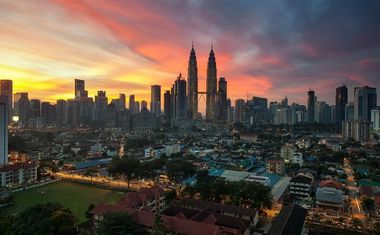
Malaysia

In South East Asia, we have established a subsidiary in Malaysia, giving us access to suitable farm land and the possibility to reach huge nearby export markets.

Our raw material

  • Our biomass crop is generally elephant grass, a high yield, drought-resistant perennial plant, known for its ease of establishment even on arid land, and its fast growth rate of up to four meters every 100 days
  • Elephant grass re-generates well after regular harvesting without re-planting
  • Elephant grass captures capture large amounts of carbon dioxide from the atmosphere when it grows
  • Elephant grass has exceptional nutritional value as animal feed

Alternative biomass

  • Bagasse, a left-over fibrous pulp from sugarcane pressing 
  • Prosopis juliflora, also known as mesquite, a shrub or small tree that is considered a highly invasive plant species in Ethiopia. It was initially introduced to combat deforestation and desertification, but its rapid spread has led to significant negative impacts on ecosystems, agriculture, and livelihoods

Our technology

  • Swedish clean-tech start-up NextFuel has patented a tube reactor technology by way of which abundant, fast-growing biomass crops can be converted into a fossil coal substitute GreenCoal that can replace fossil coal completely
  • After our elephant grass crops are harvested and dried, they are chopped and dried in a rotary drier, significantly reducing the moisture content of the elephant grass
  • The dried elephant grass is then fed into one of our torrefaction rotary drum reactors, powered by NextFuel’s technology, and manufactured by Austrian process tech pro­vider Andritz
  • In the torrefaction rotary drum reactor, the elephant grass is indirectly heated in a low oxygen atmosphere to a temperature of between 300° and 400°C
  • This process is mainly powered by surplus energy in the elephant grass itself, takes less than 30 minutes, and turns the elephant grass into water resistant, easily grindable, non-corrosive and energy dense GreenCoal
  • When the torrefaction processing is completed, the new GreenCoal is densified and cut into briquettes, thereby simplifying transport, logistics and storage in preventing biological degradation and water uptake
  • Once the briquettes have cooled, they are immediately ready for transport or use as a clean, direct coal substitute, without any technical replacements or alterations of pre-existing fossil coal handling or burning facilities

Our environmental impact

  • More than 90 percent of the fossil coal available today was originally formed during the carboniferous period
  • At the beginning of the carboniferous period 360 million years ago, evolution had just recently evolved trees with woody stems, and those trees cap­tured carbon dioxide from the atmosphere in their stems and branches when they grew, just as trees do today
  • However, evolution had yet to produce microbes that were capable of decomposing wood, and until it did some 60 million years later, enormous loads of dead wood piled up, eventually compressing into coal and retaining their cap­tured carbon dioxide in that same coal
  • For this reason, when fossil coal is burned today, the carbon dioxide released is typi­cally between 360 and 300 million years old, con­sequent­ly, although that carbon di­oxide may originally have been captured from the earth’s atmosphere, that capturing took place such a long time ago that when the carbon dioxide is once again released it is, for all intents and purposes, “new”
  • This means that the net result of burning fossil coal is an increase of carbon dioxide in the earth’s atmosphere, specifically, with 2,222 kgs of carbon dioxide for every metric tonne of fossil coal burned
  • GreenCoal is produced from elephant grass, that captures carbon dioxide in its stem and leaves just as the carboniferous-era trees once did. However, the difference, as com­pared to fossil coal, is that rather than happening more than 300 million years ago, the elephant grass will have captured its carbon dioxide merely months before it is burned. Or, put another way: The entire farming/growing-harvesting-processing-com­bustion cycle of GreenCoal takes place - essentially - today
  • Remarkably, this (com­bined with elephant grass storing some of its carbon dioxide in its roots and the soil in which it grows) means that the net result of manufacturing and burning GreenCoal is an overall decrease of carbon dioxide in the earth’s atmosphere, specifically, with 127 kgs of carbon dioxide for every metric tonne of GreenCoal burned
  • Consequently, the net result of replacing one metric tonne of fossil coal with one metric tonne of GreenCoal is that (2,222 + 127 =) 2,349 kgs less carbon dioxide is re­leased into the atmosphere. The implications of this cannot be overstated: Because a switch to GreenCoal does not require that an industrial plant is shut down, re-built or altered, and because GreenCoal costs no more than the fossil coal it replaces, GreenCoal enables any “dirty” fossil coal-fired industrial plant to go completely “green” virtually overnight at no additional cost